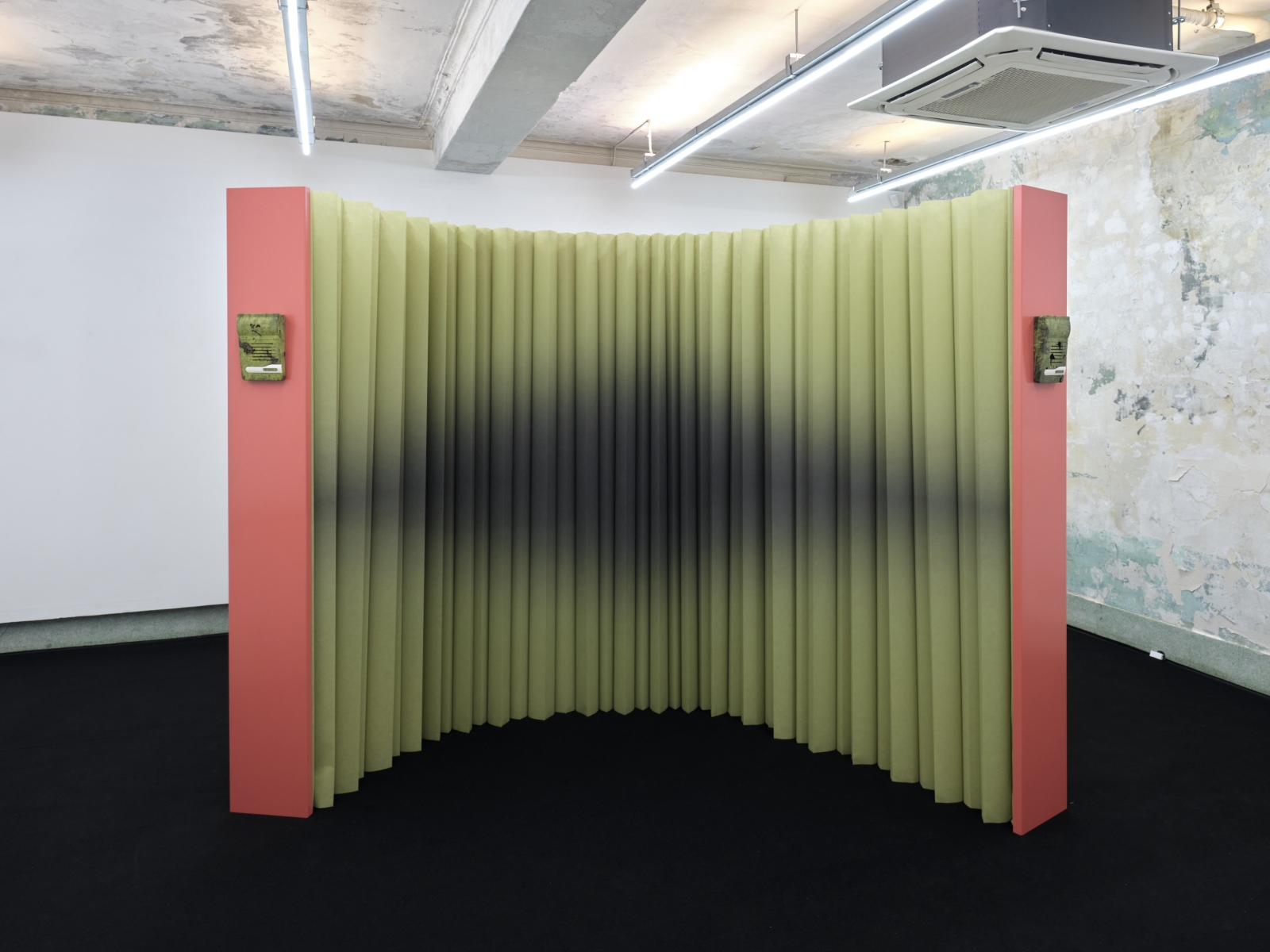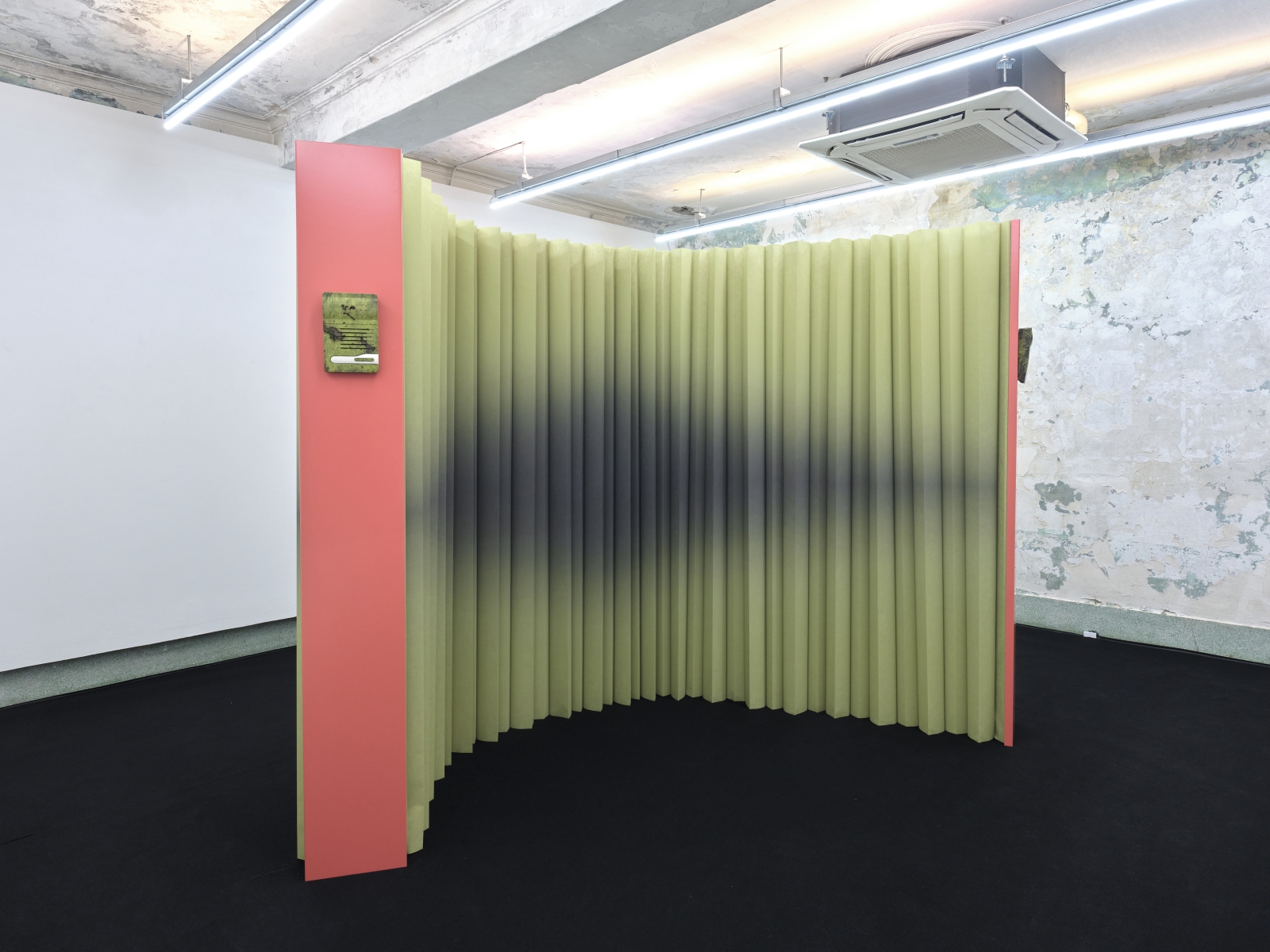
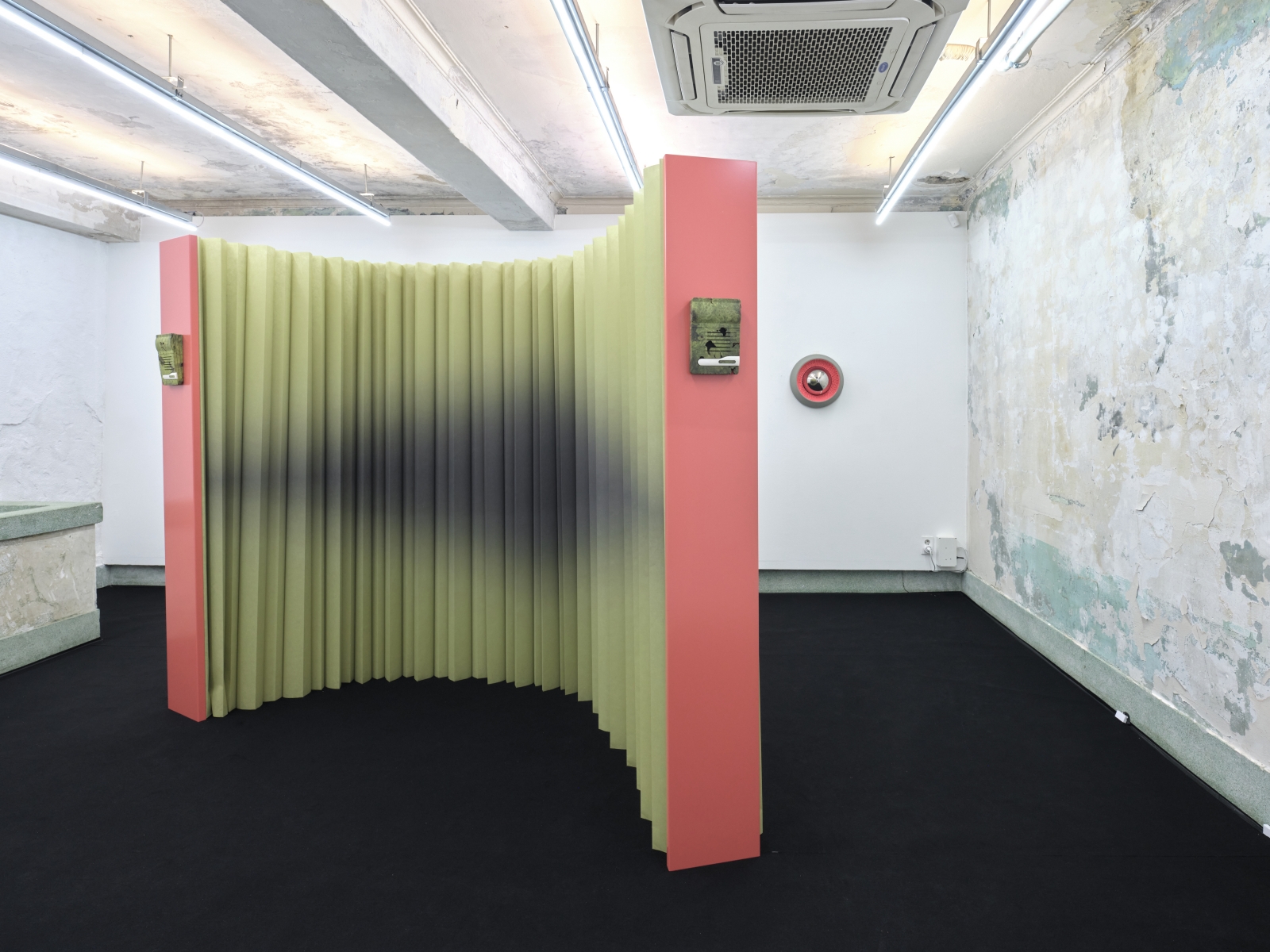
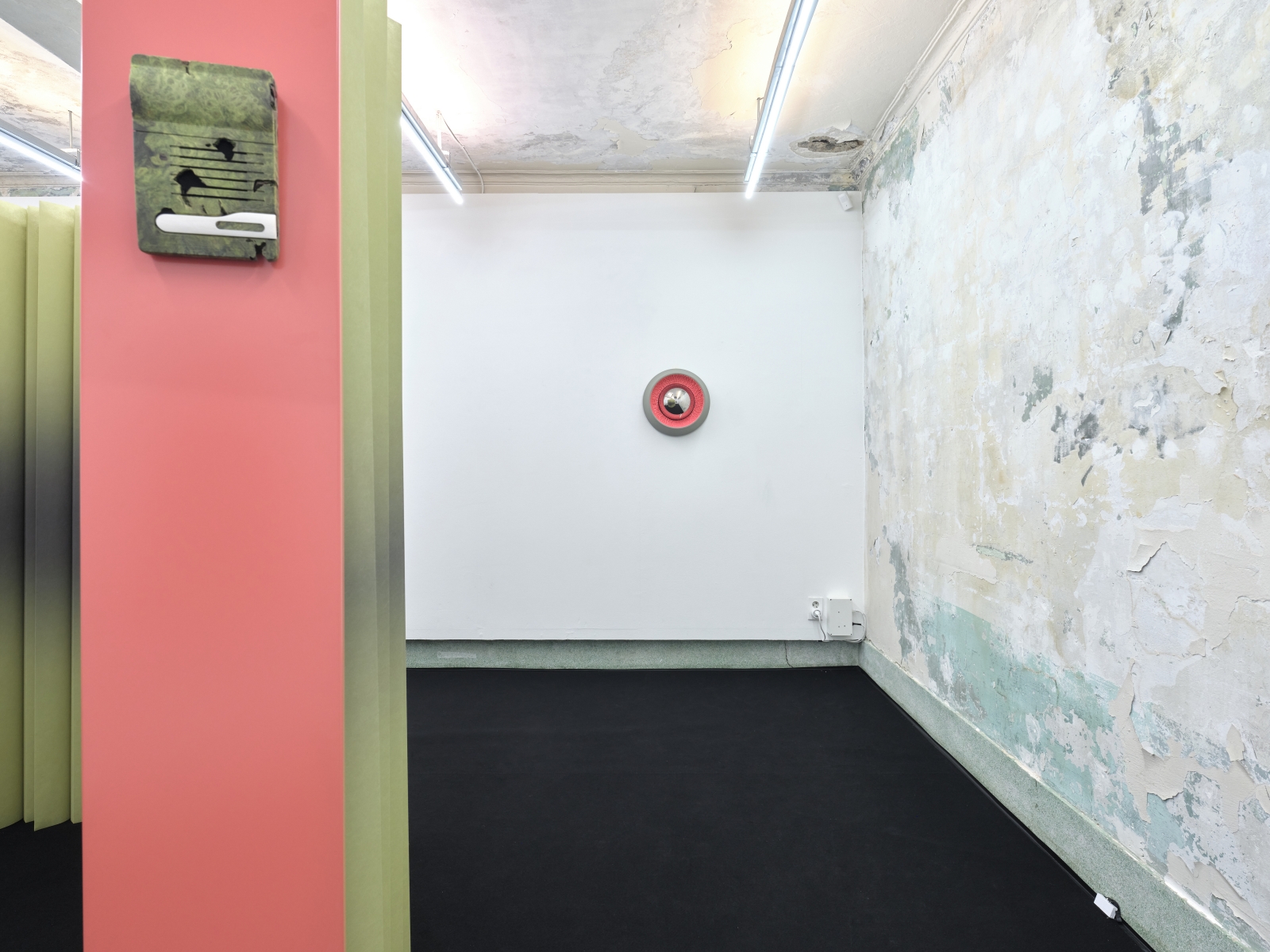
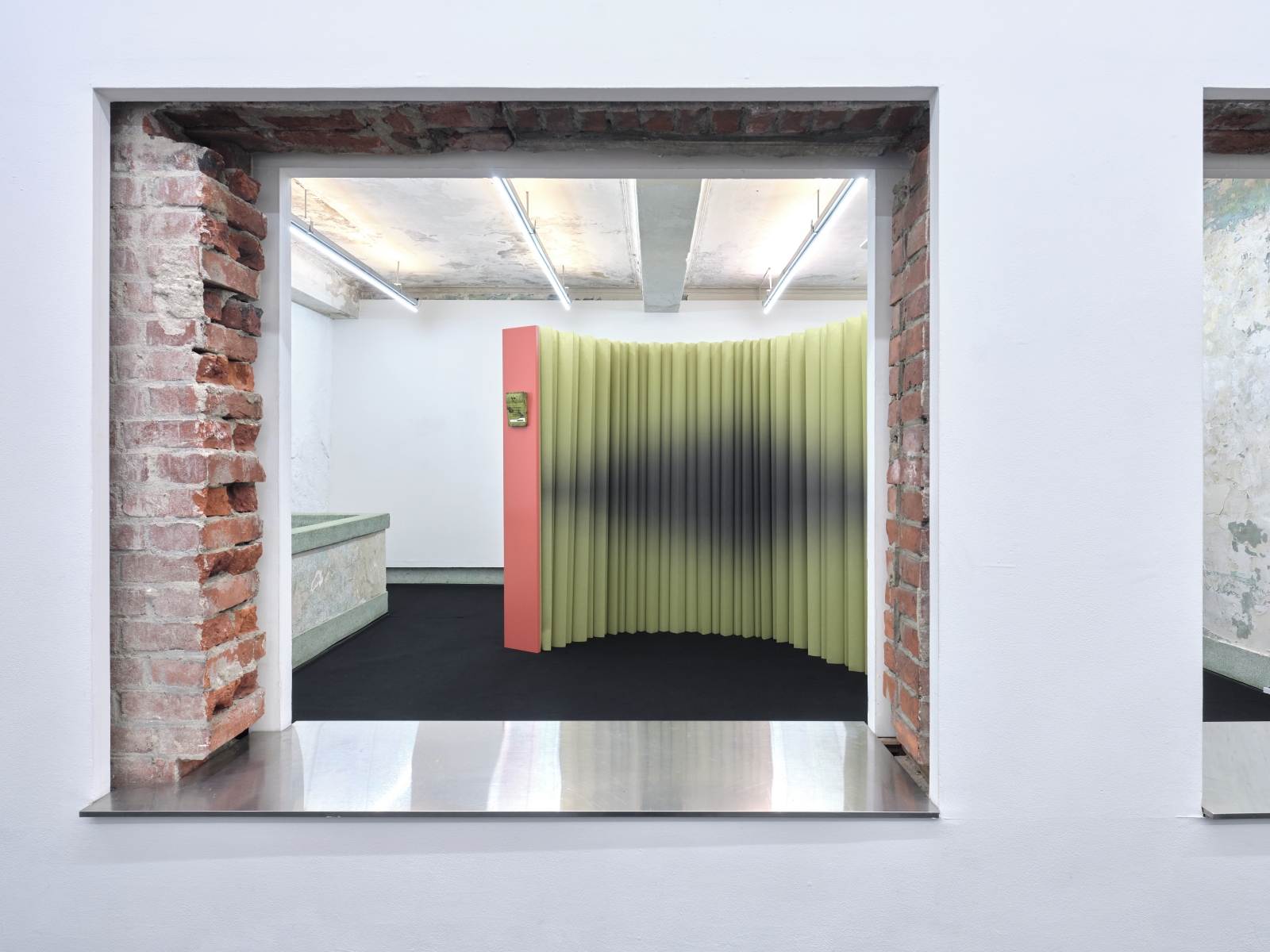
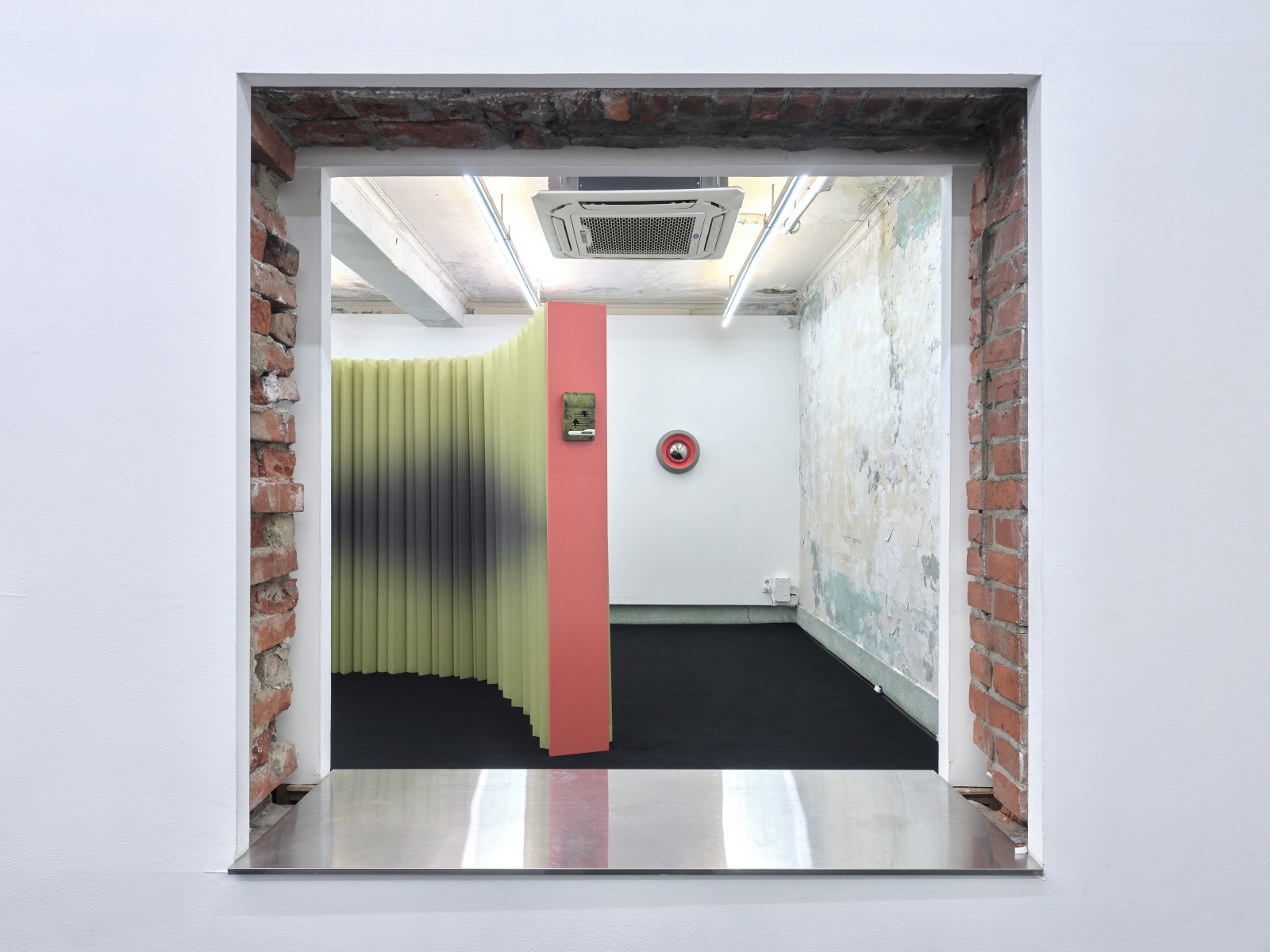
Two answering machines play a game of telephone, mishearing and misremembering as they repeat one another’s stories. Their conversation spirals and the stories become increasingly hallucinatory with each telling. What sounds at first like a memory begins to blur into a senseless chain of next likely words.
Model Collapse creates a closed generative circuit that starts poisoning itself. The answering machines, too, carry the symptoms of their condition: each is milled from burl wood—tumorous knots that form when a tree is infected and grows around its wound. The language generated by the answering machines has been trained on the largest public collection of dreams as well as the entire body of emails from the American energy conglomerate Enron that collapsed spectacularly in 2001. The largest bankruptcy in US history, the company unraveled because its fraudulent accounting was based on anticipated and predicted profits, not its current income. Projection and speculation ran the numbers until they stopped making sense. During Enron’s trial, its thousands of internal emails entered the public domain and became one of the foundational datasets for the large language models that are hollowing out office and cognitive work today.
Cooper Jacoby draws eerie parallels between different systems: failed business models which are compressed down into AI training data; AI models which collapse when repeatedly trained only on their own output; and cows as living models of how markets parcel out bodies into functional components. Each one collapses when it becomes closed in on itself. Mad Cow Disease infects the brain of cows when they ingest “beef” –  aka themselves. Equally, large language models start failing when they’re only fed themselves – they begin to hallucinate, forget, and average out into slop.
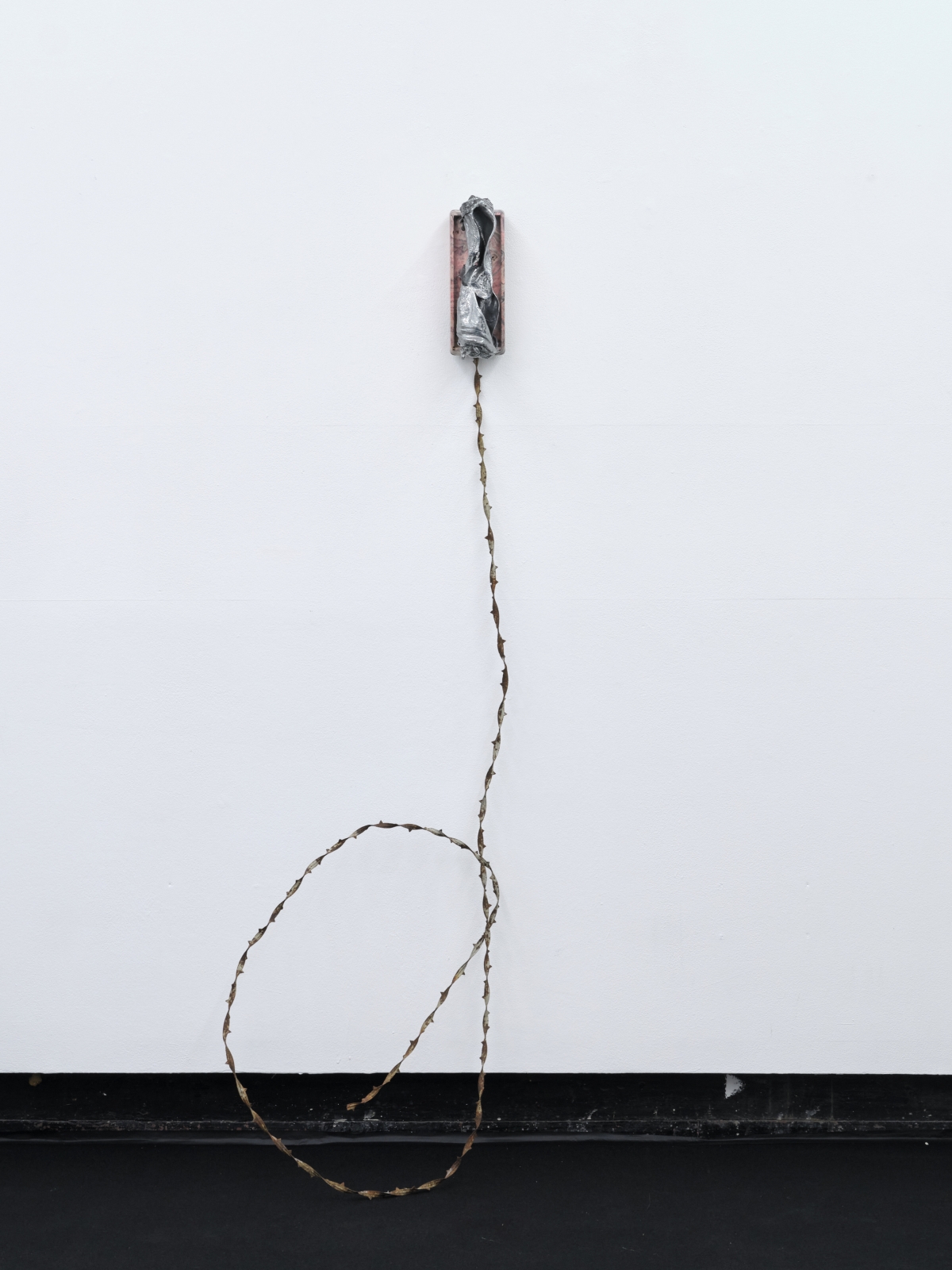
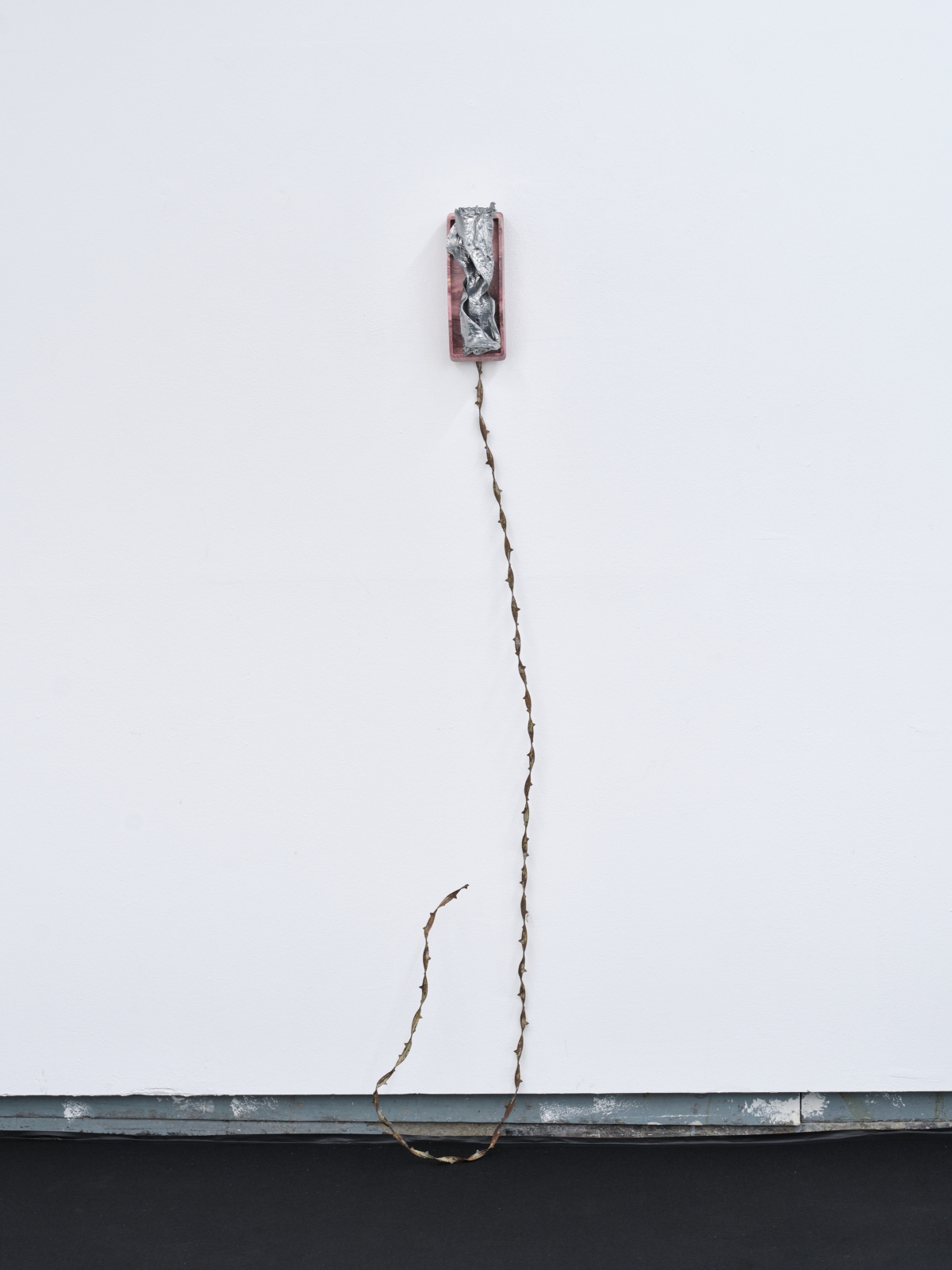
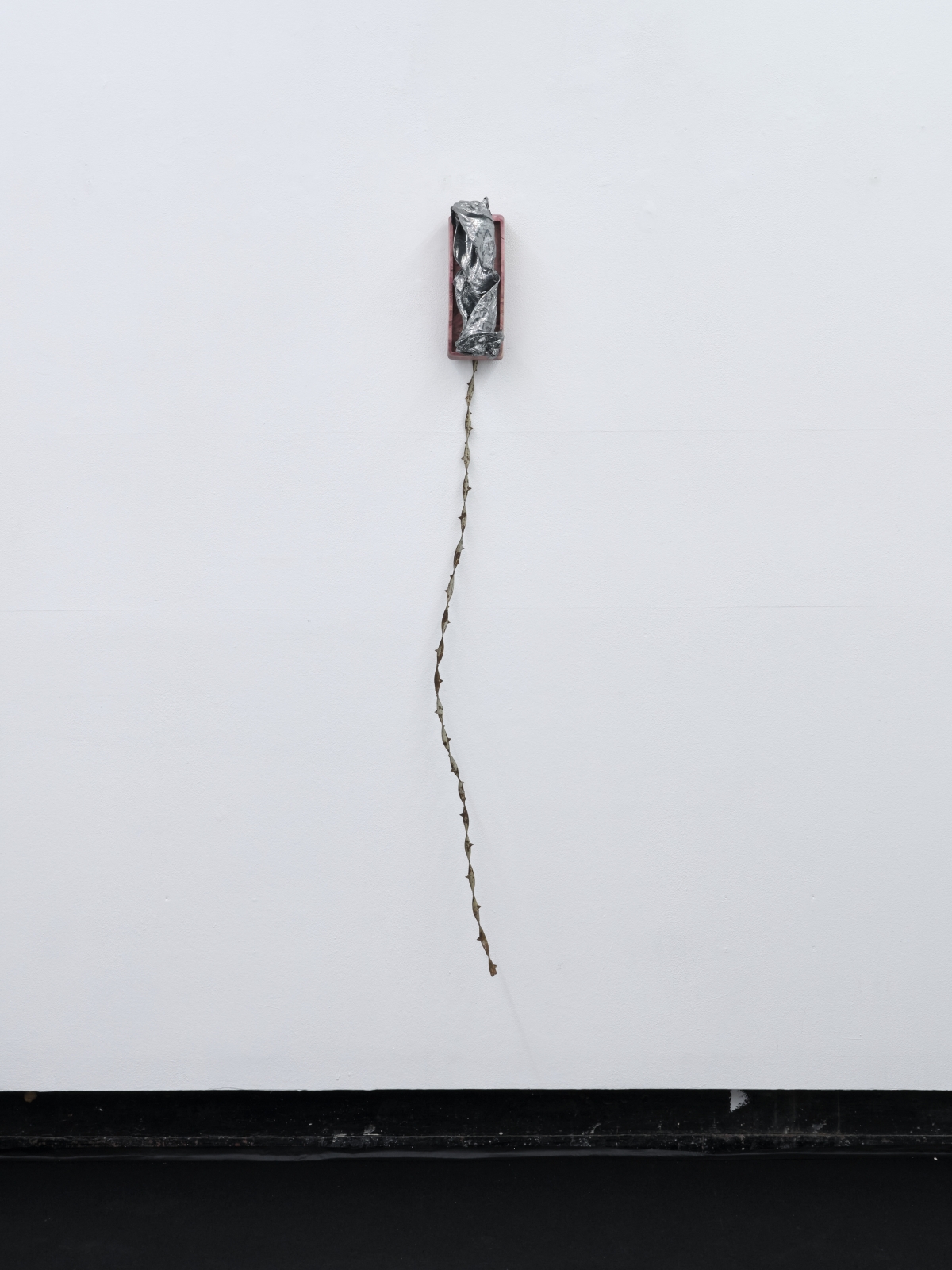
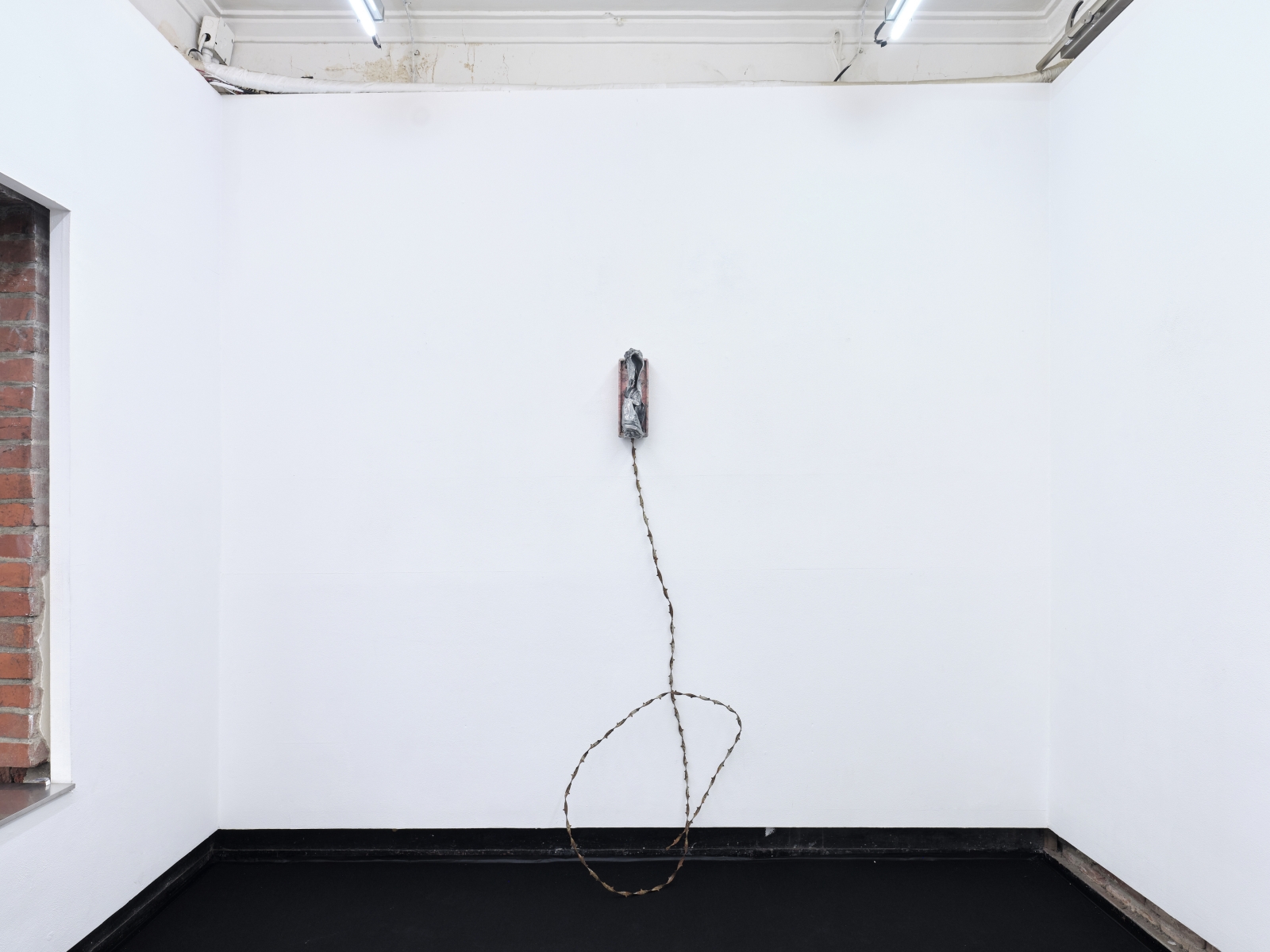
“Chain-of-thought” traces these parallel dynamics across four bodies of work that reanimate obsolescing hardware. Accompanying Model Collapse, there are Twisted Pairs, a series of sculptures that resemble wall-mounted telephones, made from cast cow ears nestled into each other with a cord of corroded, barbed wire. As America’s “Last Frontier” was colonized in the 19th century, private cattle fencing became transmissions lines for the spread of telecommunications through rudimentary local networks, a precursor to the way data centers now graft onto power-plants. Every now and then Twisted Pairs emit a whistle to one another, like lost signals from a severed grid.
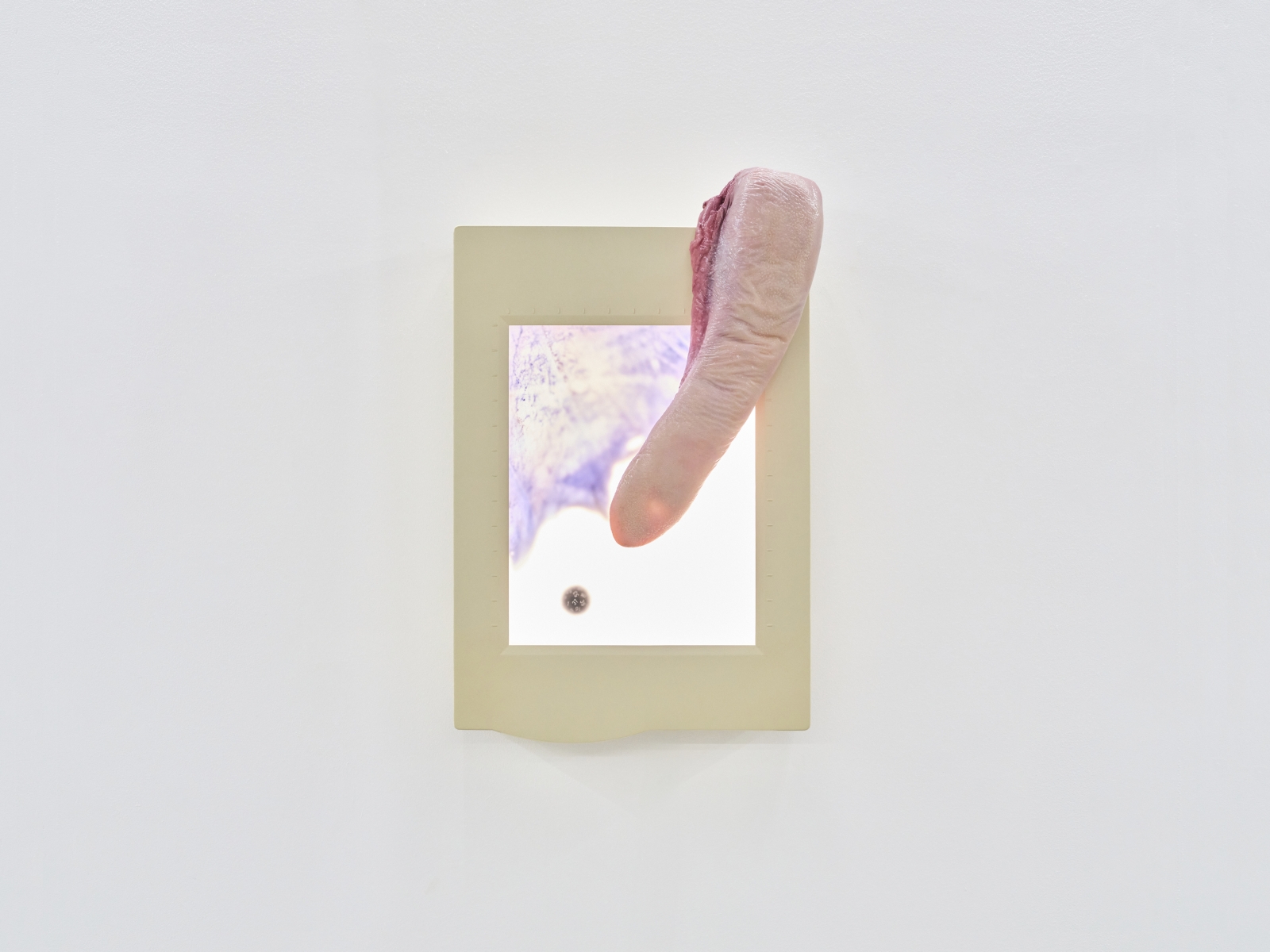
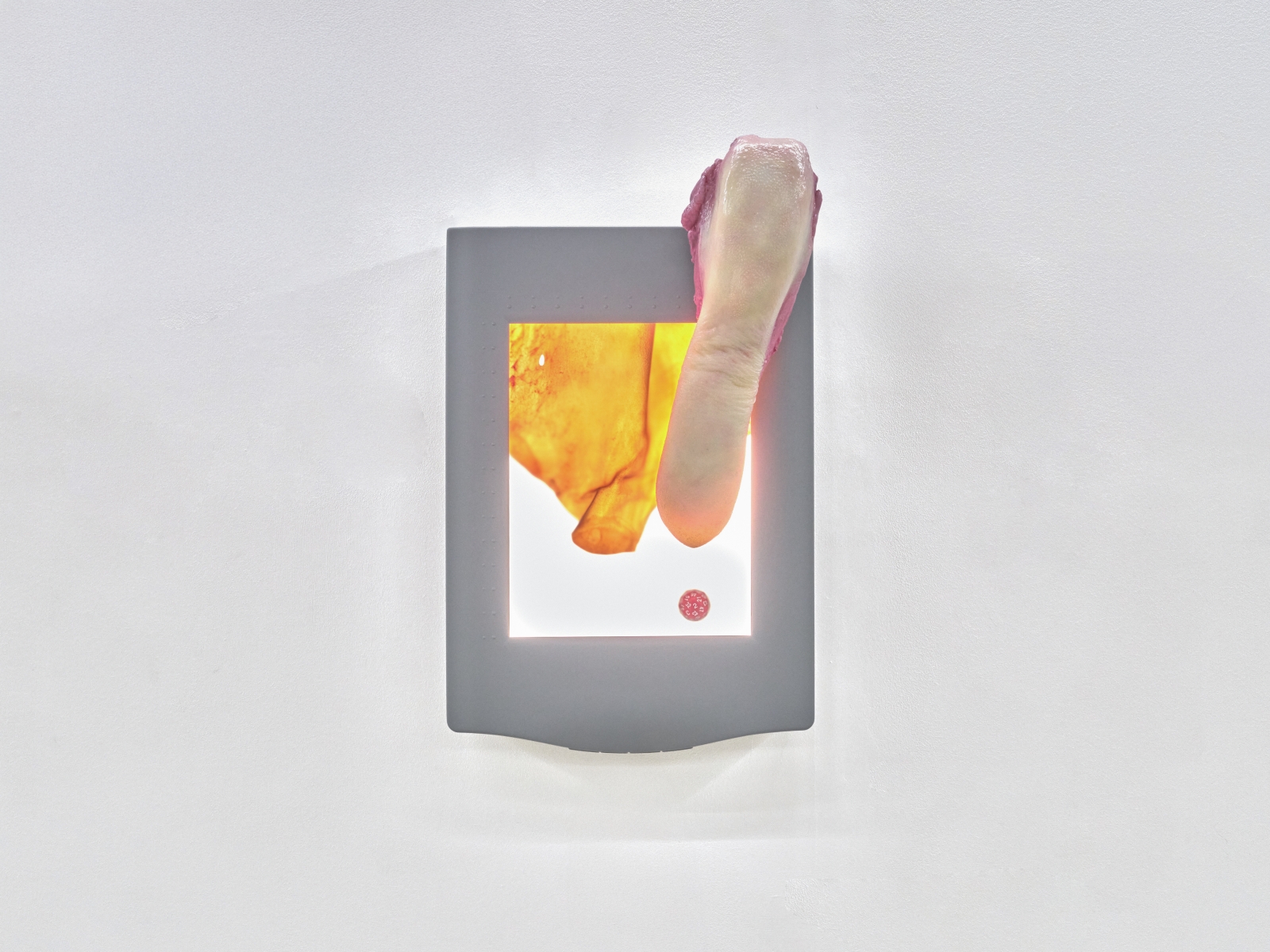
Mechanizing another part of the cow, Domesticator combines flatbed scanners with silicone cow tongues that wag slowly back and forth as they follow dice moving beneath the scanner’s glass. The scanner and its Optical Character Recognition software were pivotal in expanding the archive of digitized text, translating print into machine-predicted number strings. Domesticator maps this loop from language to prediction and back again: moving from tongue to page to code and back to speech again.
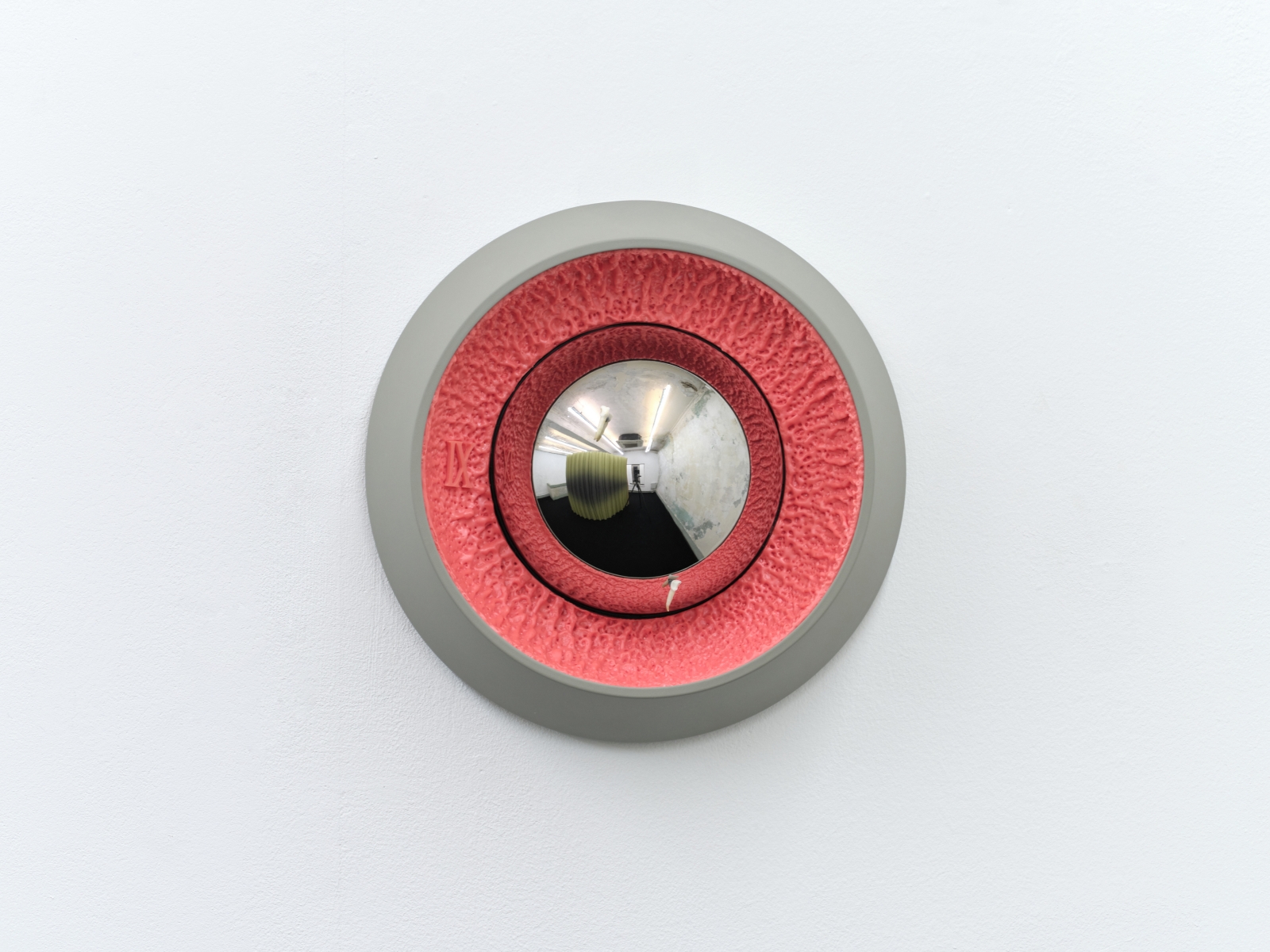
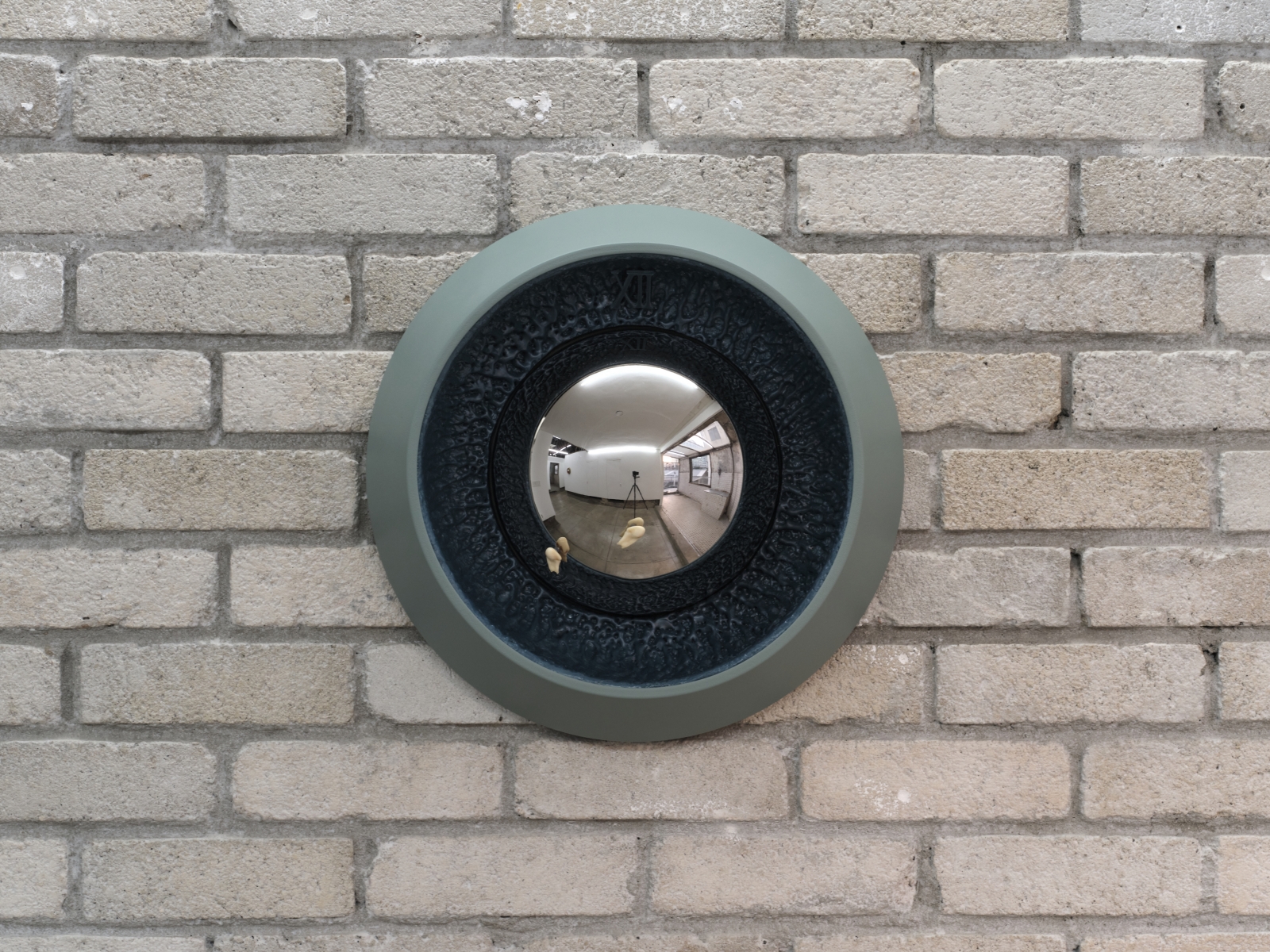
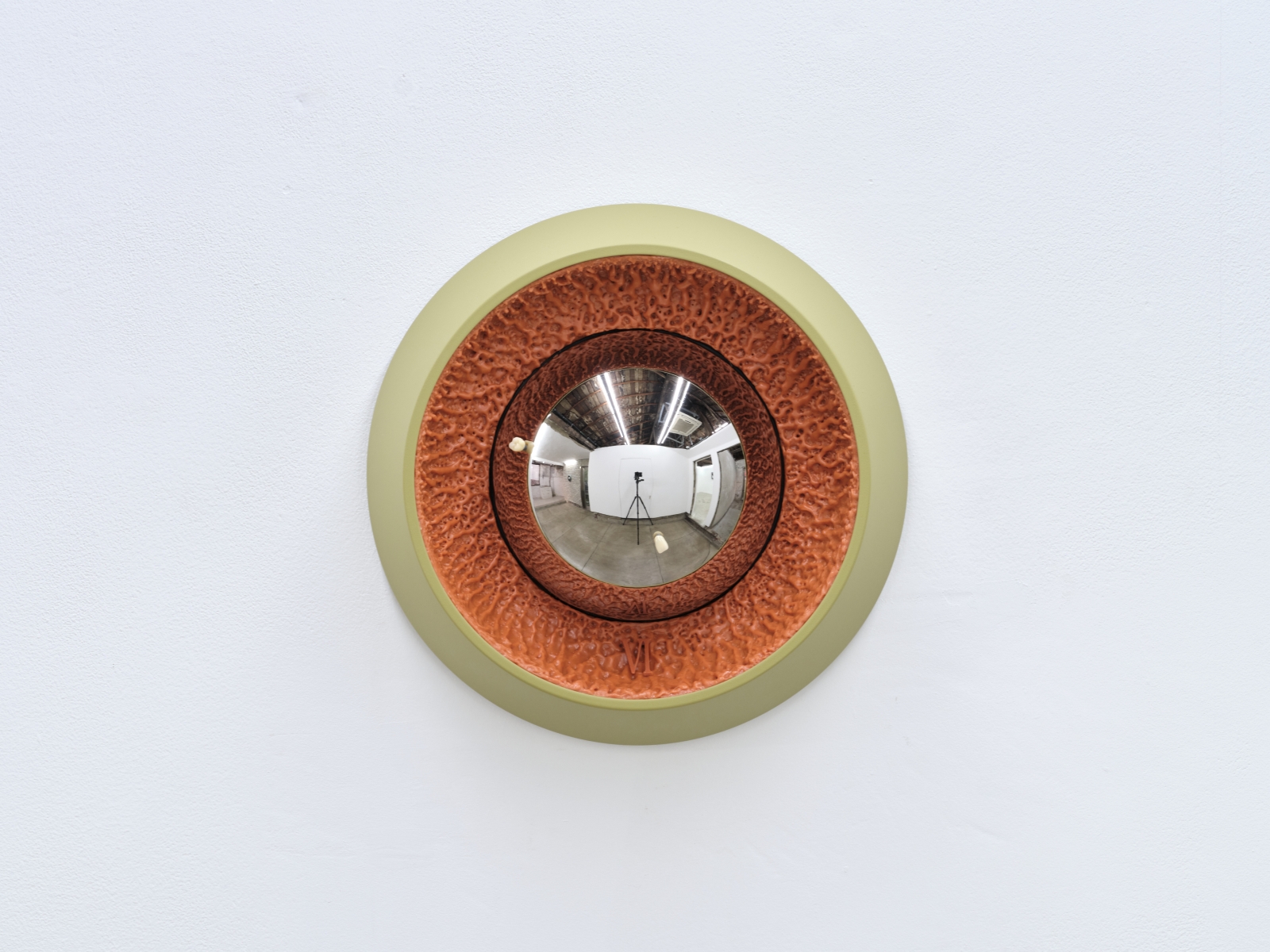
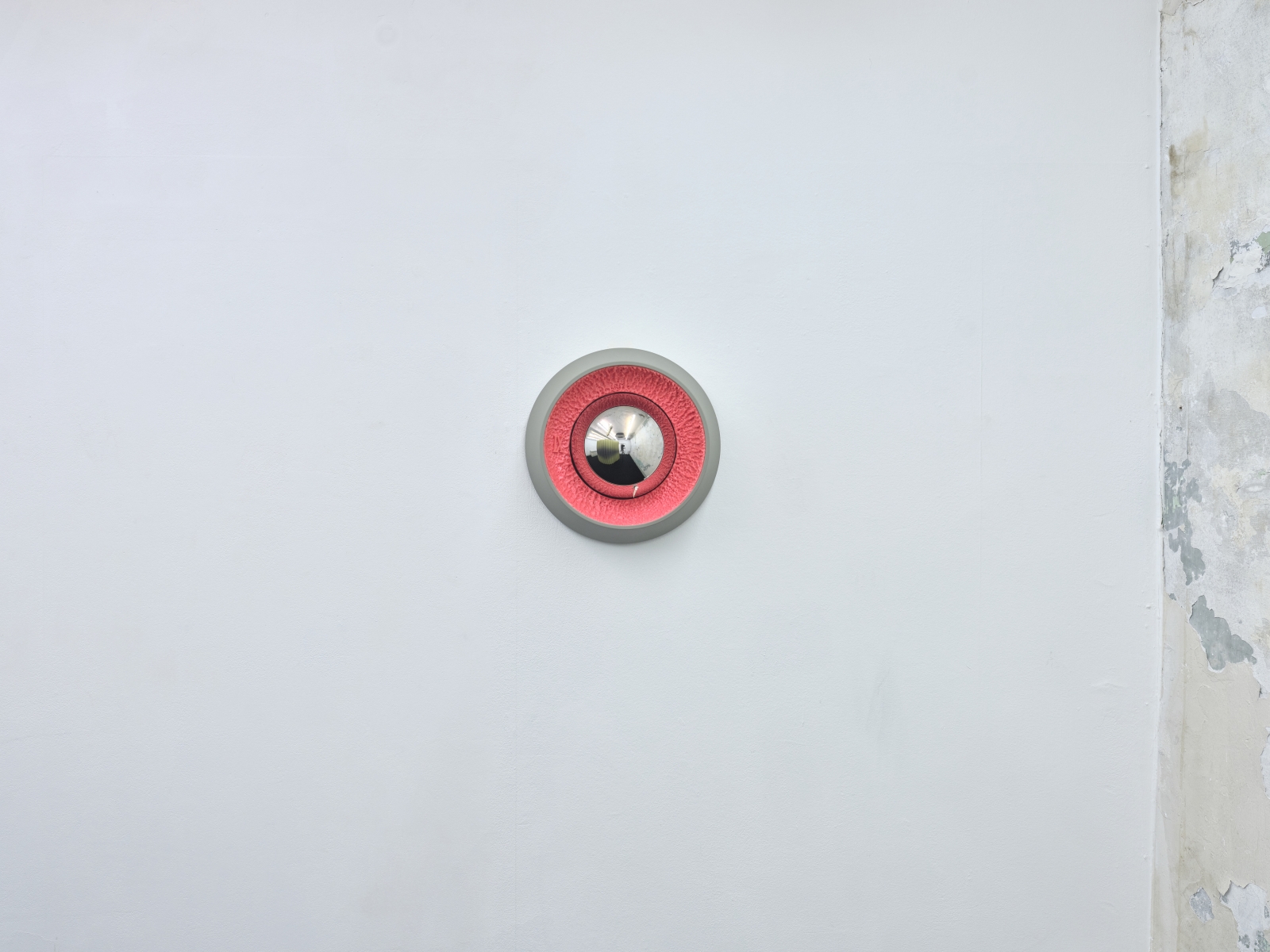
The fourth body of work, Mutual Life is a series of clocks in which teeth, both human and animal, slowly circle the surface of mirrored stainless-steel domes. Each work is a portrait of a different person’s biological age, as opposed to their chronological age, moving faster or slower depending on the individuals supposed cellular age compared to population averages. Insurance companies are increasingly interested in this biological age to more accurately predict and price lifespan – another step of turning life itself into a quantifiable asset that can be predicted and hedged against.
From rusted cattle fencing to corporate fraud training data, from cow tongues to answering machines, “Chain-of-thought” roots an increasingly hallucinatory world in the machines that digest us. However, these systems require our words and attention to survive; without us, they stare in the mirror and start devouring themselves.
The artist thanks Mayra Berrones, Agnes Fury Cameron, Leo Elia, Juergen and Hildegard Findeisen, Robbie Fitzpatrick and Fitzpatrick Gallery, Aric Grauke and Stephanie Seidel.
두 대의 자동 응답기가 서로의 이야기를 주고받는다. 그러나 대화가 이어질수록 서로를 오해하고, 점차 엇나가기 시작한다. 말은 왜곡되고 기억은 틀어지며, 반복되는 대화 속 이야기는 환각처럼 흩어진다. 처음엔 누군가의 기억처럼 들리던 말이 이내 ‘다음에 올 법한 그럴듯한 단어들’의 연쇄로 무너진다.
Cooper Jacoby의 개인전 《Chain-of-thought》에서 선보이는 〈Model Collapse〉는 스스로를 소모하며 반복되는 폐쇄적 순환 구조를 구축한다. 작업의 주요 매체인 응답기 또한 이러한 상태를 닮아 있다. 감염된 나무가 스스로의 상처를 감싸며 비정상적으로 자라날 때 생겨나는 혹처럼, 뒤틀린 옹이결의 벌 우드를 깎아 제작되었다. 이들이 만들어내는 언어는 세계 최대 규모의 꿈 데이터 아카이브와 2001년 파산한 미국 에너지 기업 엔론(Enron)의 이메일 데이터로 훈련된 인공지능에서 비롯된다. 미국 역사상 최대 규모의 파산으로 기록된 엔론은 실제 수익이 아닌 ‘예상 이익’을 기반으로 회계를 조작했으며, 투기와 전망이 지배하던 그 구조는 결국 스스로의 논리를 잃고 붕괴했다. 재판 과정에서 공개된 수천 통의 내부 이메일은 대규모 언어 모델의 초기 학습 데이터로 사용되었고, 역설적이게도 오늘날 우리의 사무와 사고를 대체하는 인공지능 시스템의 기반이 되었다.
Jacoby는 서로 다른 시스템들 속에서 기이하게 유사한 작동 방식을 포착한다. AI 학습 데이터로 환원된 실패한 기업 모델, 자기 산출물만을 반복 학습하다 붕괴하는 인공지능 모델, 그리고 시장이 살아 있는 신체를 기능 단위로 분할하는 방식을 보여주는 살아있는 모델로서의 소. 이 모든 체계는 자기 안으로 수렴하는 순간 붕괴한다. 광우병은 소가 ‘쇠고기,’ 즉 자기 자신을 섭취할 때 뇌에 감염이 일어나는 질병이다. 마찬가지로 언어 모델 또한 자기 언어만을 먹기 시작할 때 환각을 일으키고, 기억을 잃고, 결국 모든 것을 희미하게 만들어버린다.
Chain-of-thought》은 점차 퇴화해가는 하드웨어를 활용한 네 개의 연작을 통해 이렇듯 닮은 붕괴의 메커니즘을 탐구한다. Model Collapse〉와 함께 전시되는 Twisted Pairs〉는 벽걸이 전화기를 연상시키는 조각 연작으로, 서로 맞물린 소의 귀 주형을 부식된 가시철사로 연결해 제작되었다. 19세기 미국이 ‘마지막 개척지(Last Frontier)’를 확장하던 시기, 사유지를 구분하기 위해 세운 소 울타리는 지역 간 통신망을 잇는 전신선으로 전환되며 원시적 통신 네트워크를 형성했다. 이는 오늘날 데이터센터가 발전소 위에 병합되는 구조의 전신이기도 하다. 〈Twisted Pairs〉는 간헐적으로 서로를 향해 휘파람 소리를 내보내며, 끊어진 전력망 속을 떠도는 잃어버린 신호처럼 공명한다.
한편,〈Domesticator〉는 소의 또 다른 신체 부위를 기계화한 작업이다. 평판 스캐너 위 실리콘으로 만든 소의 혀가 놓여 있고, 스캐너 유리 아래에서 굴러다니는 주사위를 따라 느릿하게 좌우로 움직인다. 스캐너와 그 안의 광학 문자 인식(OCR) 소프트웨어는 인쇄물을 숫자 문자열로 변환하며, 방대한 디지털 텍스트 아카이브를 확장시키는 데 중요한 역할을 해왔다. 〈Domesticator〉는 이러한 언어의 순환 과정을 시각화한다. 언어가 예측으로, 그리고 다시 언어로 되돌아오는 회로를 형성하며, 혀에서 페이지로, 페이지에서 코드로, 그리고 다시 음성으로 이어지는 순환을 보여준다.
마지막으로 Mutual Life〉는 인간과 동물의 치아가 거울 스테인리스 돔 위를 천천히 회전하는 시계 연작이다. 각 시계는 개인의 ‘연대기적 나이’가 아니라 신체의 세포 상태를 기준으로 한 ‘생물학적 나이’를 나타내며, 평균 인구의 세포 노화 속도와 비교해 해당 인물의 세포가 더 빠르거나 느리게 노화하는 정도에 따라 시계의 움직임 속도도 달라진다. 최근 보험 산업은 이러한 생물학적 나이를 수명 예측과 보험료 산정의 새로운 기준으로 삼으며, 삶 자체를 예측 가능한 자산으로 전락시키려는 시도를 보여준다. 〈Mutual Life〉는 이러한 계산의 논리 속에서 인간의 시간과 신체가 어떻게 측정되고 상품화되는지를 드러낸다.
녹슨 가축 울타리에서 기업의 사기 데이터, 소의 혀에서 응답기에 이르기까지, Chain-of-thought〉은 우리를 갉아먹는/소모하는 기계들 안에서 작동하는 비현실적인 세계에 기반한다. 또한, 우리의 언어와 주의를 전제로만 존재하며, 우리가 사라지는 순간 결국 자기 자신만을 응시하며 천천히 붕괴할 시스템을 보여준다.
작가는 메이라 베로네스, 애그니스 퓨리 캐머런, 레오 엘리아, 위르겐 및 힐데가르트 핀데이젠, 로비 피츠패트릭과 피츠패트릭 갤러리, 아릭 그라우케, 그리고 스테파니 자이델에게 감사의 뜻을 전한다.